
When AI Agents Run Your Business: A Few Weeks of Lessons for Leaders
Over the past few weeks, working mostly on my own, I:
- Launched a new company — ZeroKVault (zerokvault.com) — including the full platform, the Android and iOS apps, the content, the security work, hosting and backups, a security audit, and invoicing and collections.
- Rebuilt JDE Partners' visual identity and shipped a new website, jdepartners.com.
- Reviewed several contracts.
- Filed taxes in two jurisdictions.
- Built an expense-management app that reads every bank and credit-card statement and produces the reports I use to run the business.
- Extended the app I use to manage my own investments.
- And cleared dozens of smaller tasks, personal and professional.
A few years ago, that list would have meant a team, a meaningful budget, and several months. This time it took weeks — and most of the heavy lifting was done by an AI agent. In my case, Claude.
I'm not writing this to be impressed by the technology. I'm writing because the lessons behind that list matter far more than the list itself — especially if you lead or advise a medium or large business.
Lesson 1: Agents are extraordinary — if you know how to use them (link to section)
The capability is real. This is no longer a demo or a clever autocomplete. A well-directed agent can take a genuine business objective and carry it a long way toward done — code, documents, analysis, research, the unglamorous operational work that usually sits in a queue for weeks.
But "well-directed" is doing a lot of work in that sentence.
Lesson 2: The real job is orchestration (link to section)
Here is the part most people miss. Using agents well is not about clever prompts. It is about orchestration — and orchestration is general management.
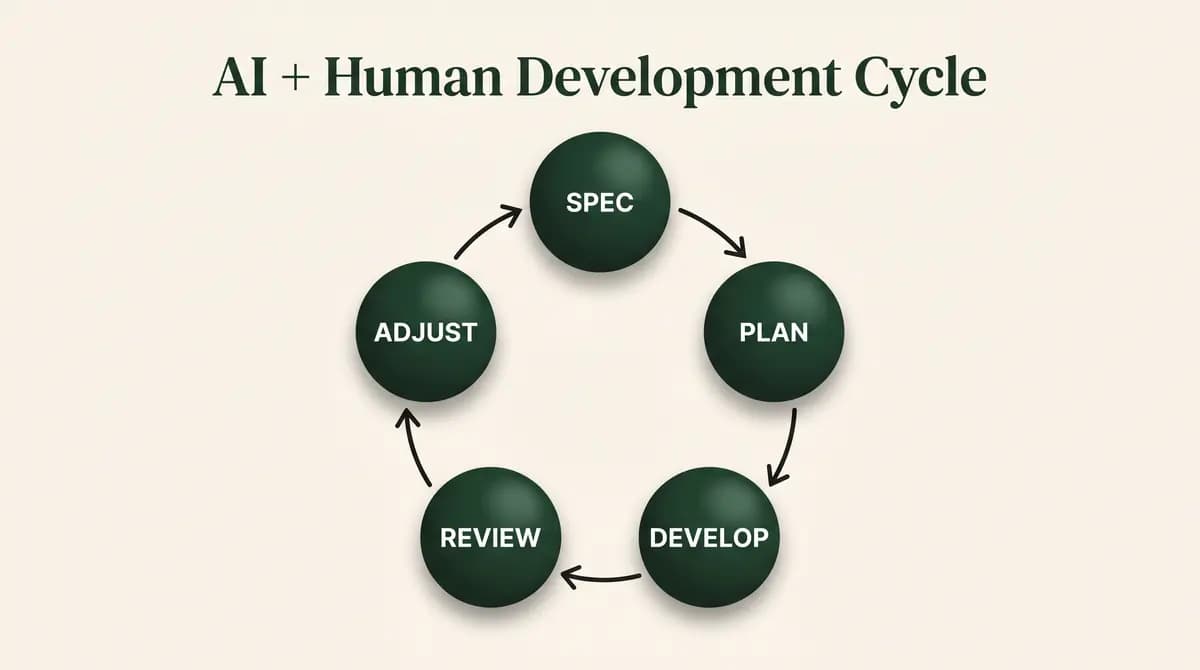
You still need to know what you are trying to achieve. You still need to break it into pieces, set the standard, guide the work, review it honestly, and adjust. The cycle I keep coming back to is simple: spec → plan → develop → review → adjust.
Run that cycle with discipline and the results are remarkable. Skip steps — stop specifying clearly, stop reviewing — and you lose the thread fast. The agent will happily build the wrong thing, confidently. The constraint is no longer the work. The constraint is your clarity.
For anyone who has run a P&L or a function, this should feel familiar. It is the same job. The leverage is just much higher.
Lesson 3: The economics are great today — and that deserves a closer look (link to section)
This is where leaders need to pay attention.
With a flat subscription — at the time of writing, roughly USD 20/month for an entry plan and USD 100/month for a heavier one — the cost of all that output is, frankly, trivial. It changes the math on what is worth doing at all.
But there is a second pricing model: pay-as-you-go, billed per million tokens. Here the equation changes completely. Any non-trivial task that needs real context now costs a few dollars — sometimes much more. Run those all day, across a team, and you are at hundreds or thousands of dollars a month before you have noticed. Same technology, very different economics.
Just how far this can go is worth seeing. Peter Steinberger — the developer behind OpenClaw — recently shared his own usage: a single person, running agents at full tilt, burning through 603 billion tokens and over USD 1.3M in API spend in a month.
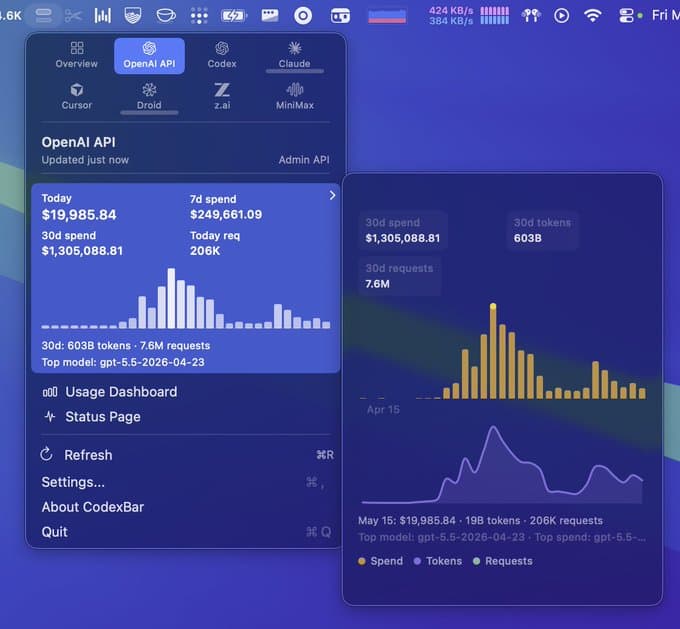
One developer's monthly agent spend. Screenshot via Peter Steinberger on X.
That is an extreme case, not a typical one. But it shows the shape of the risk: on pay-as-you-go, there is no natural ceiling. The same leverage that makes a subscription feel free can quietly turn into a serious bill.
And there is a bigger point underneath both numbers. Today's prices are heavily subsidized by the companies racing to win this market — OpenAI, Anthropic, and others. Ed Zitron has written a sharp piece on this ("AI's economics don't make sense"). You do not have to agree with all of it, but three of his points are worth holding onto:
- The leading AI companies are losing enormous amounts of money — the price you pay does not cover what the service costs to run.
- The underlying compute and infrastructure costs are massive and still growing, and the model depends on continuous, very large rounds of outside capital.
- There is no clear, proven path to profitability yet — which means today's pricing is a promotional period, not a settled market.
Translation for a business leader: enjoy the subsidy, but do not build a permanent plan on a temporary price. A reckoning — higher prices, tighter limits, or both — is more likely than not.
What this means for you (link to section)
The right move depends on where you sit.
If you lead or manage a large company or function: stay disciplined. The temptation will be to let AI spread organically through every team. Don't. Build the business case, develop, test, measure — the same rigor you would apply to any other investment. And put real pressure on your third-party contractors: they are using these tools too, and their costs are falling right now. Your contracts should reflect that.
Be honest about the downside as well. In a large organization, costs pile up quietly across dozens of teams. Ungoverned AI tools can open serious security exposure. And without standards, you end up with a sprawl of small, undocumented, hard-to-maintain applications — a genuine CTO nightmare two years from now. The opportunity is real; so is the mess if you do not manage it.
If you run a small business: the time is now. For the first time, custom software for your repetitive, annoying processes is within reach — the expense app I described would never have cleared a cost-benefit hurdle before. Use this window, while it is still subsidized, to automate as much as you sensibly can.
If you are starting a company: the time is now, too. Legal, tax and accounting, software, branding — it has never been cheaper to get real work done. But think like a general manager. Keep a clear cycle — spec, plan, develop, review, adjust — and resist the temptation to skip steps as you speed up. Speed without the cycle is just fast mistakes.
The bottom line (link to section)
AI agents are not magic, and they are not a threat to leadership. They are leverage. They reward exactly the skills good general managers already have — clarity of objective, the discipline to run a process, and the judgment to review honestly.
The window where this leverage is also cheap will not stay open forever. Use it well, and use it now. 🚀